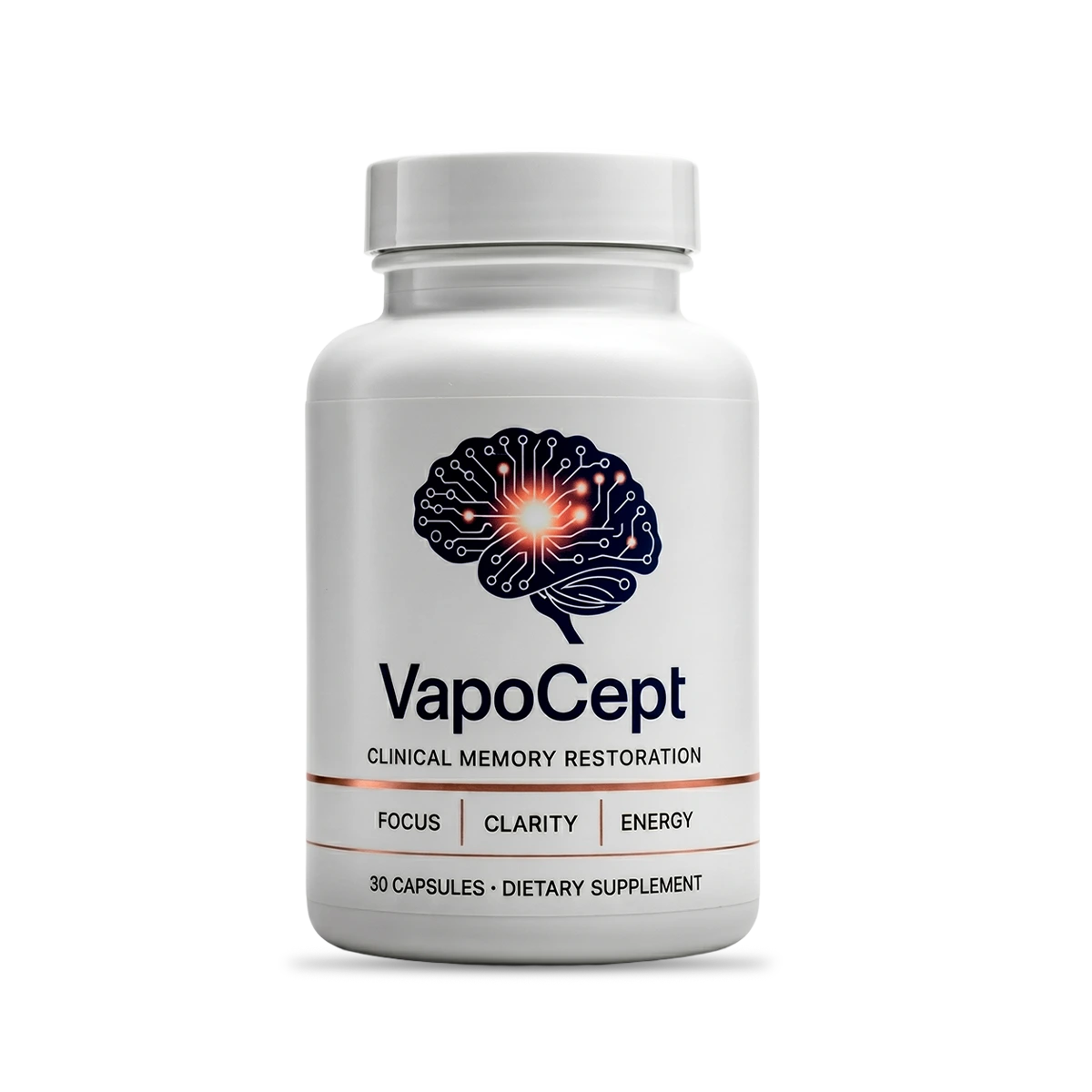
A wall of five-star VapoCept® reviews tells you nothing. What's useful is the pattern — including the complaints, which are consistently more informative than the praise.
Theme one: timing catches almost everyone out
The single most common piece of feedback, positive and negative, is about how long it takes. Customers who report something they value almost always place it between week four and week ten. Customers who abandon it almost always do so inside the first three weeks.
That isn't mysterious. The human trials behind these ingredients run eight to twenty-four weeks before measuring anything, and lutein accumulates in tissue over months. A single bottle is thirty capsules — less than the minimum honest assessment window. This is also why the two-bottle package generates more disappointment than the six.

"Four stars, and the missing one is about cost rather than the product. Two bottles wasn't enough to judge anything. The six-pack is the only version that makes sense, which means the real entry price is higher than it looks."

"I took the advice about writing things down in week one, which felt silly. Ten weeks later I compared and I'd genuinely cut my phone reminders down. Without the note I'd have told you nothing changed."

"My problem was never storing things — it was fading out around three o'clock and taking nothing in after that. That's what shifted first, in the second month. Still fade, just later and less steeply."
Theme two: people want language for what's wrong
A recurring note in positive feedback has nothing to do with how the product feels. It's that separating recall, attention, processing speed and stamina gave people a way to describe what they'd been vaguely calling "memory" for years.
Several mention realising their actual complaint was afternoon stamina or attention rather than memory at all — which, in a couple of cases, sent them to a doctor about sleep rather than to a checkout. We'd call that a good outcome.
Theme three: VapoCept® complaints, grouped honestly
"It did nothing." The most common negative review and an entirely legitimate result. Botanical formulas don't work for everyone; individual variation in absorption and baseline status both contribute. This is what the guarantee is for.
"I didn't realise the capsule was gelatin." A recurring and completely avoidable complaint from vegetarian and vegan buyers. The shell is bovine gelatin and the product isn't certified halal or kosher. We put this on the homepage, the ingredient page and here, because it's the most predictable reason for a return.
"Mild stomach upset at first." Almost always from taking it on an empty stomach. Turmeric is the likely culprit. Taking it with a meal resolves it in most cases and improves absorption too.
"I take blood thinners and had to stop." Ginkgo affects bleeding time. This should be caught before purchase — if you're on warfarin, clopidogrel, apixaban or daily aspirin, talk to your prescriber first.
"Two bottles wasn't a fair trial." Correct, and worth saying plainly: a 60-day supply barely reaches the start of the window where the research measures anything.
Theme four: what "working" actually looks like
Customers reporting a benefit rarely describe anything dramatic. The recurring descriptions: fewer reminder notes, less mid-sentence word-searching, more patience for reading in the evening, less frustration by late afternoon, slightly better crossword or puzzle times.
If your benchmark is a transformed memory, you'll be disappointed — and so would you be by anything else legally sold as a dietary supplement.
How to evaluate it for yourself
Write down two or three specific, checkable things before you start. How many reminders you set in a week. How often you lose a word mid-sentence. How you feel reading at 9pm. Vague impressions after the fact are unreliable in both directions; specific notes taken at week one and week ten are worth considerably more.
Testimonials reflect individual experiences and are not a guarantee that you will have the same result. Individual results vary.
See Pricing & Packages